China Best Lead Thyroid Shield Suppliers?
Choosing among the Best Lead Thyroid Shield Suppliers in China requires more than comparing online prices. A reliable supplier should demonstrate practical manufacturing experience, verified materials, and consistent quality control. Radiation-protection specialist Dr. Eric J. Hall stated, “The goal of radiation protection is to prevent deterministic effects and limit stochastic effects.” This principle should guide every purchasing decision.
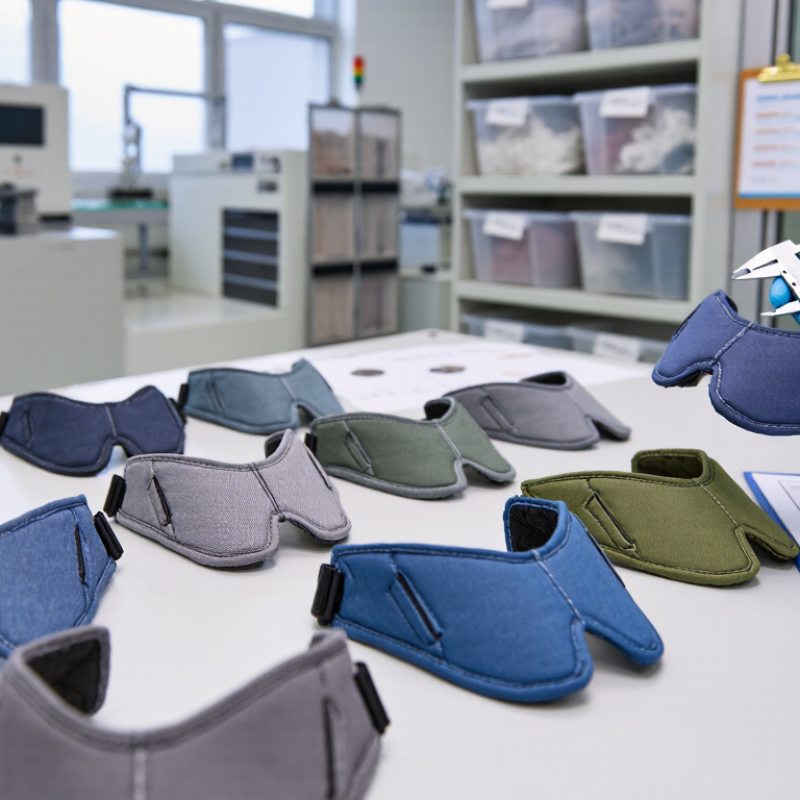
A professional supplier can provide clear lead-equivalent specifications, product drawings, testing records, and batch traceability. The thyroid shield should sit comfortably under the chin without pressing against the neck. Its overlap must protect the thyroid area without restricting movement. Check the protective material, outer fabric, stitching, closures, and cleaning instructions. Small details matter in daily clinical use.
Buyers should also examine factory audits, sample consistency, export experience, and after-sales support. Product claims should be supported by recognized laboratory reports, not attractive photographs alone. Ask whether the reported lead equivalence applies to the complete shield or only its inner layer. That difference can be overlooked.
Cost still matters. It should not control the entire decision. An inexpensive shield may become costly if cracks, stiffness, or poor sizing appear early. Even experienced buyers can miss these weaknesses during a rushed order. That is worth admitting.
This guide will compare leading Chinese manufacturers through evidence-based criteria, including protection performance, customization, documentation, delivery reliability, and communication. The goal is not to promote one name blindly. It is to help hospitals, dental clinics, imaging centers, and distributors identify the Best Lead Thyroid Shield Suppliers for dependable, compliant, and practical use.
What Is a Lead Thyroid Shield and Why Is It Used?
A lead thyroid shield is a fitted protective collar designed to reduce scattered X-ray radiation reaching the thyroid gland. It is commonly considered during dental imaging, fluoroscopy, radiography, and some interventional procedures. The thyroid is radiosensitive, especially in children and younger patients. ICRP Publication 103 assigns the thyroid a tissue weighting factor of 0.04, reflecting its contribution to overall radiation risk.
Protection depends on fit, coverage, and correct positioning. A poorly placed collar can leave the lower neck exposed or interfere with the image field. Practical shields often use lead-equivalent materials, commonly around 0.25 to 0.50 mm, depending on the procedure and facility protocol. NCRP Report No. 160 reported that medical exposure represented about 48% of average radiation exposure for people in the United States in 2006. The figure is historical, but it shows why exposure control remains important.
Not every examination requires thyroid shielding. Current guidance often favors avoiding unnecessary shielding when it blocks anatomy, affects automatic exposure control, or causes repeat imaging. That detail is easy to overlook. A qualified radiation safety professional should assess the equipment, procedure, patient age, and local rules before selecting a shield. Regular inspection also matters. Cracks, folds, or poor fastening can reduce protection, even when the outer surface looks acceptable.
Key Standards for Evaluating Chinese Thyroid Shield Suppliers
China Best Lead Thyroid Shield Suppliers?
When evaluating Chinese thyroid shield suppliers, begin with documented protection performance. Ask for lead-equivalence test reports from qualified laboratories. The report should identify material thickness, testing method, and production batch. Vague claims are not enough. Look for quality systems aligned with ISO 13485, where applicable. Product materials should also meet relevant biocompatibility requirements.
Fit matters in daily clinical use. A shield should cover the thyroid area without pressing against the neck. Check fastening strength, edge finishing, stitching, and surface cleanliness. Request samples in different sizes. Test them during simulated movement, not only on a table. Small design flaws become uncomfortable during long procedures. They can also reduce consistent use.
Reliable suppliers provide traceability from raw materials to final inspection. Ask how they control lead-equivalent material, sewing errors, and damaged protective layers. Clear inspection records are valuable. So are written warranty terms and responsive technical support. Confirm export documents and compliance evidence before placing a large order. Factory videos can help, but an independent audit is stronger. No supplier is flawless. That includes experienced factories. A careful buyer should record weaknesses, request corrective actions, and review performance after delivery. Supplier selection becomes more dependable when evidence replaces attractive catalog language.
Materials, Designs, and Protection Levels Available
When evaluating China’s best lead thyroid shield suppliers, focus on material evidence, not catalog language. Common options include lead rubber, lead vinyl, and lightweight composite sheets. Lead rubber bends smoothly around the neck. Lead vinyl often offers a softer surface and easier cleaning. Composite materials can reduce weight, but their performance needs verified testing. Material thickness alone does not prove protection. Ask for batch records, density data, and independent test reports. A practical sample check should examine seams, edges, closures, and surface cracks.
Design affects comfort and consistent use during imaging procedures. Look for adjustable collars, broad coverage, and secure hook-and-loop closures. Some users prefer a contoured shield that rests below the jaw. Others need flexible panels for different body sizes. The inner lining should resist moisture and remain comfortable against skin. Gaps can appear. That detail is easy to overlook. Suppliers with technical staff should explain cleaning limits, storage conditions, and replacement criteria. Clear drawings and dimensional tables make comparison more reliable.
Protection levels must match the examination, exposure pattern, and local safety guidance. Suppliers may describe attenuation using lead-equivalent values, such as 0.25 or 0.50 millimeters. These figures require test conditions and documentation. A qualified radiation-safety professional should review the intended application. Do not select the heaviest model automatically. Excess weight can reduce compliance and encourage poor positioning. In procurement work, small differences often matter. A shipment may look excellent yet reveal uneven coverage during inspection. That possibility deserves honest attention. Compare samples, certificates, warranty terms, and after-sales response before ordering.
How to Compare Manufacturing Quality, Certifications, and Pricing
China Best Lead Thyroid Shield Suppliers?
Comparing suppliers requires more than checking the lowest quotation. Manufacturing quality begins with material consistency, accurate lead-equivalent labeling, and sealed stitching around the neck and fastening areas. Request batch test reports, not only a factory certificate. IEC 61331-3 covers protective clothing requirements, while ISO 9001 mainly evaluates quality-management systems. It does not prove shielding performance. This distinction is often missed.
Professional data also supports careful evaluation. NCRP Report No. 160 found that medical imaging contributed about 48% of the average American’s radiation exposure in 2006. The figure is old, but the procurement lesson remains relevant: protective accessories should be tested, inspected, and replaced when damaged. The IAEA’s radiation protection guidance emphasizes dose optimization and quality assurance. Ask for test conditions, lead-equivalent values, dimensions, weight, and inspection procedures. A thick shield is not automatically a better shield.
Tips: Compare the same shielding level and size. Check flexibility after repeated bending. Ask whether independent laboratories verified the report. Review packaging and storage instructions, too. A low price may reflect thinner material, weaker closures, or limited testing. That is not always true, but it deserves questions. Pricing should include samples, testing, shipping, replacement terms, and defect handling. A supplier that answers slowly may still produce acceptable goods; however, unclear records create avoidable risk.
Questions to Ask Before Choosing a Chinese Supplier
China Best Lead Thyroid Shield Suppliers?
Before choosing a Chinese supplier, ask for measurable evidence, not attractive product photos. Does the thyroid shield have tested lead equivalence at specific kVp settings? Request independent laboratory reports, test dates, sample numbers, and the applicable standard, such as IEC 61331-1. IAEA guidance stresses that protective garments require documented performance, correct fitting, and regular inspection. A certificate without test conditions tells very little.
Ask how the supplier controls material thickness, stitching, seams, and folding damage. Also ask for batch traceability, incoming-material records, and a replacement policy. WHO estimates that about 3.6 billion diagnostic X-ray examinations occur globally each year. UNSCEAR reports that medical exposure is the main source of artificial ionizing radiation for the population. Small protection failures can therefore matter across many clinical settings.
Request samples before placing a large order. Measure the collar area, fastening strength, weight, and comfort after repeated use. Ask whether the product remains flexible after storage and cleaning. Do not accept “100% protection” claims; shielding performance depends on energy, fit, and exposure conditions. A low price may hide weaker quality control. No checklist is perfect. Recheck the supplier’s documents against the delivered sample, because my assumptions could be wrong. Assess communication, corrective action, and consistency over several batches. Reliable sourcing is demonstrated repeatedly, not promised once.