China Best Medical Syringe Manufacturer for Global Buyers
Choosing the China Best Medical Syringe Manufacturer for Global Buyers requires more than comparing prices. It requires verifiable quality, stable production, and practical export experience. WHO and UNICEF reported approximately 14.5 million zero-dose children worldwide in 2023. This figure shows why dependable injection supplies remain essential. A delayed shipment can interrupt vaccination services, especially in remote clinics with limited storage.
Professional buyers should examine every production detail. Does the factory use medical-grade polypropylene? Are needles assembled in controlled environments? Can each batch provide traceable inspection records? ISO 7886-1 supports essential performance requirements for sterile, single-use syringes. ISO 13485 certification also indicates a structured medical-device quality system, although certification alone cannot prove perfect performance. That distinction matters.
Industry research from Grand View Research identifies strong growth in the global disposable syringe market, driven by vaccination, chronic disease care, and hospital demand. However, market growth does not automatically mean reliable manufacturing. Buyers should review sterilization validation, leakage testing, packaging integrity, and complaint-handling procedures. Small details matter. A cracked blister, unclear graduation mark, or stiff plunger can affect clinical confidence.
China offers broad manufacturing capacity, competitive supply chains, and experienced OEM service. Yet capability varies widely between factories. Our evaluation approach focuses on documented processes, sample testing, responsive communication, and realistic lead times. We may not claim perfection. No responsible manufacturer should. The stronger goal is consistent improvement, transparent evidence, and dependable Medical Syringe supply for hospitals, distributors, vaccination programs, and healthcare partners worldwide.
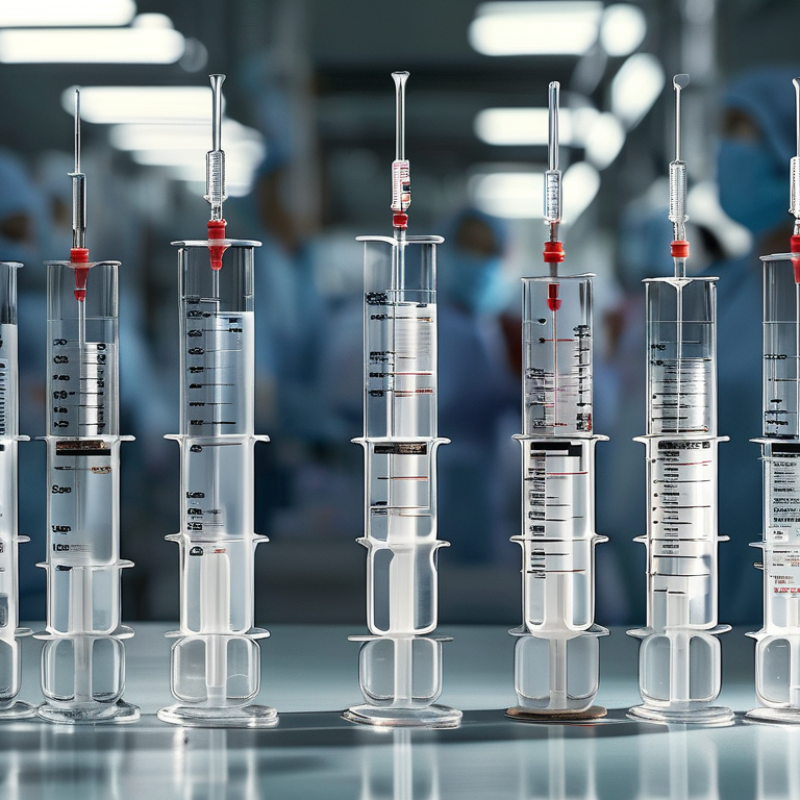
Medical Syringe Manufacturing in China: Industry Overview
China’s medical syringe industry serves hospitals, laboratories, distributors, and healthcare projects worldwide. Manufacturing ranges from basic disposable syringes to specialized designs for controlled clinical use. A capable factory manages material selection, mold accuracy, assembly, sterilization, and packaging within one quality system.
Medical-grade polypropylene is commonly used for barrels because it offers clarity and stable performance. Needles require suitable stainless steel, precise grinding, and consistent attachment.
During production, inspectors check plunger movement, barrel clarity, graduation accuracy, leakage, and packaging integrity. Small flaws matter. A tiny seal defect can affect clinical handling.
Reliable manufacturers usually operate under documented procedures and quality systems such as ISO 13485. They should also provide batch records, test reports, traceability details, and samples for evaluation. Global buyers must confirm whether the syringe meets the requirements of the destination market.
Certificates alone are not enough. Factory audits, production trials, and independent testing can reveal practical risks.
No production line is perfect. Even experienced teams may face mold wear, packaging damage, or uneven inspection results. Honest suppliers explain corrective actions instead of hiding weaknesses. Buyers should review communication speed, change-control practices, complaint handling, and delivery consistency. These details often show more than a polished product catalog.
Key Standards and Quality Controls for Medical Syringes
China Best Medical Syringe Manufacturer for Global Buyers
Key Standards and Quality Controls for Medical Syringes
Reliable syringe production begins with controlled materials and clear technical standards. Manufacturers should select medical-grade polymers, approved elastomers, and compatible lubricants. Material certificates must be checked before production starts. Biocompatibility assessment should follow relevant ISO 10993 principles. The barrel must remain clear, smooth, and dimensionally stable. Small defects can affect dose accuracy.
Critical dimensions include barrel capacity, nozzle fit, plunger movement, and dead space. Production teams should test leakage under pressure and monitor injection force. Graduation marks need strong contrast and consistent positioning. Sterility controls require validated processes, sealed packaging, and documented environmental monitoring. Different sterilization methods demand different checks, including residual limits and package integrity.
Quality inspection should continue after assembly. Automated vision systems can identify cracks, particles, incomplete markings, and bent needles. Sampling plans should be risk-based, not chosen only for convenience. Each batch needs traceable records, operator checks, equipment calibration, and retained samples. A practical audit should also review complaints and repeated defects. No control plan is perfect. Experienced teams may still miss a subtle seal weakness or confusing label. That is why independent rechecks, supplier reviews, and periodic process validation remain necessary for dependable global supply.
Types of Syringes Offered by Chinese Manufacturers
China Best Medical Syringe Manufacturer for Global Buyers
Chinese medical syringe manufacturers offer several designs for different clinical and laboratory needs. Standard disposable syringes commonly range from 1 mL to 60 mL. They may use luer slip or luer lock connections, depending on equipment compatibility. Insulin syringes feature fine graduations and short, fixed needles for controlled dosing. Tuberculin syringes support small-volume measurements, often with clear 1 mL barrels. Oral syringes use a needle-free tip for liquid medication delivery. Catheter-tip syringes suit irrigation and feeding applications when their design matches the intended device.
Safety syringes may include shields or retractable mechanisms that reduce accidental needle exposure. Low dead-space models can help limit residual liquid, but performance depends on barrel and plunger tolerances. A small detail matters. Buyers should request samples before placing volume orders. Check graduation clarity, plunger smoothness, gasket movement, connector fit, and package sealing. A syringe that feels smooth may still show measurement variation under inspection.
Reliable suppliers usually provide material declarations, sterilization records, batch traceability, and test reports from qualified laboratories. Buyers should confirm applicable requirements for their destination market, including dimensions, labeling, sterility, and biocompatibility. Factory audits can reveal practical issues, such as inconsistent assembly or weak carton protection. No product fits every workflow. Even experienced purchasers sometimes overlook storage temperature or transport humidity. Careful sampling and documented quality checks make supplier decisions more dependable.
How Global Buyers Evaluate a Chinese Syringe Manufacturer
Global buyers evaluate a Chinese syringe manufacturer through evidence, not polished factory photos. The WHO’s injection-safety report estimated about 16 billion injections worldwide each year, making consistency essential. Buyers usually review ISO 13485 certification, production records, complaint handling, and batch traceability. They also check compliance with ISO 7886-1 for single-use syringes and relevant biocompatibility requirements. A certificate alone is not enough. Auditors should match its scope with the actual syringe model and production site.
Manufacturing experience appears in small details. Can operators explain needle attachment checks, lubricant control, and seal testing? Are cleanroom pressure records available for review? Reliable suppliers provide samples from ordinary production, not only carefully selected samples. Buyers should examine barrel clarity, plunger movement, graduation accuracy, packaging seals, and sterilization documentation. Independent laboratory testing adds confidence, especially for critical dimensions and sterility. Still, no factory is flawless. A supplier that openly reports a corrective action may deserve more trust than one claiming zero problems.
Tips: Request three recent batch records, not one. Verify certificate numbers with the issuing body. Ask how rejected products are isolated. Check whether shipping cartons protect sterile packaging during humid, long-distance transport. Price matters, but unexplained price gaps need investigation. I have seen evaluations focus heavily on unit cost, while overlooking inspection frequency and change-control procedures. That is an easy mistake. A strong manufacturer welcomes technical questions, permits reasonable audits, and explains limitations without vague promises.
Export, Packaging, and Regulatory Considerations for Buyers
China Best Medical Syringe Manufacturer for Global Buyers
Export quality begins with traceability, not a low quotation. The World Health Organization estimates that about 16 billion injections occur worldwide each year, making consistent syringe performance essential (WHO, Injection Safety Fact Sheet). Experienced buyers should request material specifications, batch records, sterility evidence, and product drawings before ordering. A reliable manufacturer should also explain export documents, destination-country registration, and customs requirements clearly. Vague answers are warning signs.
Packaging needs equal attention. ISO 11607 requires sterile-barrier packaging to maintain sterility until the point of use. Buyers should check seal strength, package integrity, labeling, and transport testing. A carton should survive vibration, compression, and humid shipping conditions. In practice, samples may look perfect while packaging fails after long ocean freight. That detail is often underestimated. Packaging validation should cover the final configuration, not only an empty pouch.
Regulatory files must match the target market. For Europe, buyers should review applicable requirements under Regulation (EU) 2017/745 and relevant harmonized standards. For the United States, classification and 510(k) obligations may apply, depending on the syringe type and intended use. The International Medical Device Regulators Forum promotes greater regulatory alignment, but requirements still differ by country. A certificate scan is not enough. Buyers should verify issuing bodies, expiry dates, manufacturing sites, and change-control procedures. The Global Medical Device Nomenclature system can also support clearer product identification. Even careful sourcing teams sometimes overlook translation accuracy, which can delay registration or create labeling confusion.
China Medical Syringe Export, Packaging, and Regulatory Considerations
Common syringe capacities used in international procurement include 1 mL, 3 mL, 5 mL, 10 mL, 20 mL, 30 mL, and 50/60 mL formats. Buyers should also verify sterility status, individual blister or peel packaging, labeling, batch traceability, and compliance with applicable requirements such as ISO 7886-1 and destination-market regulations.
The chart shows nominal syringe capacity in milliliters. These are standard product-size options, not market-share or company-sales data.